
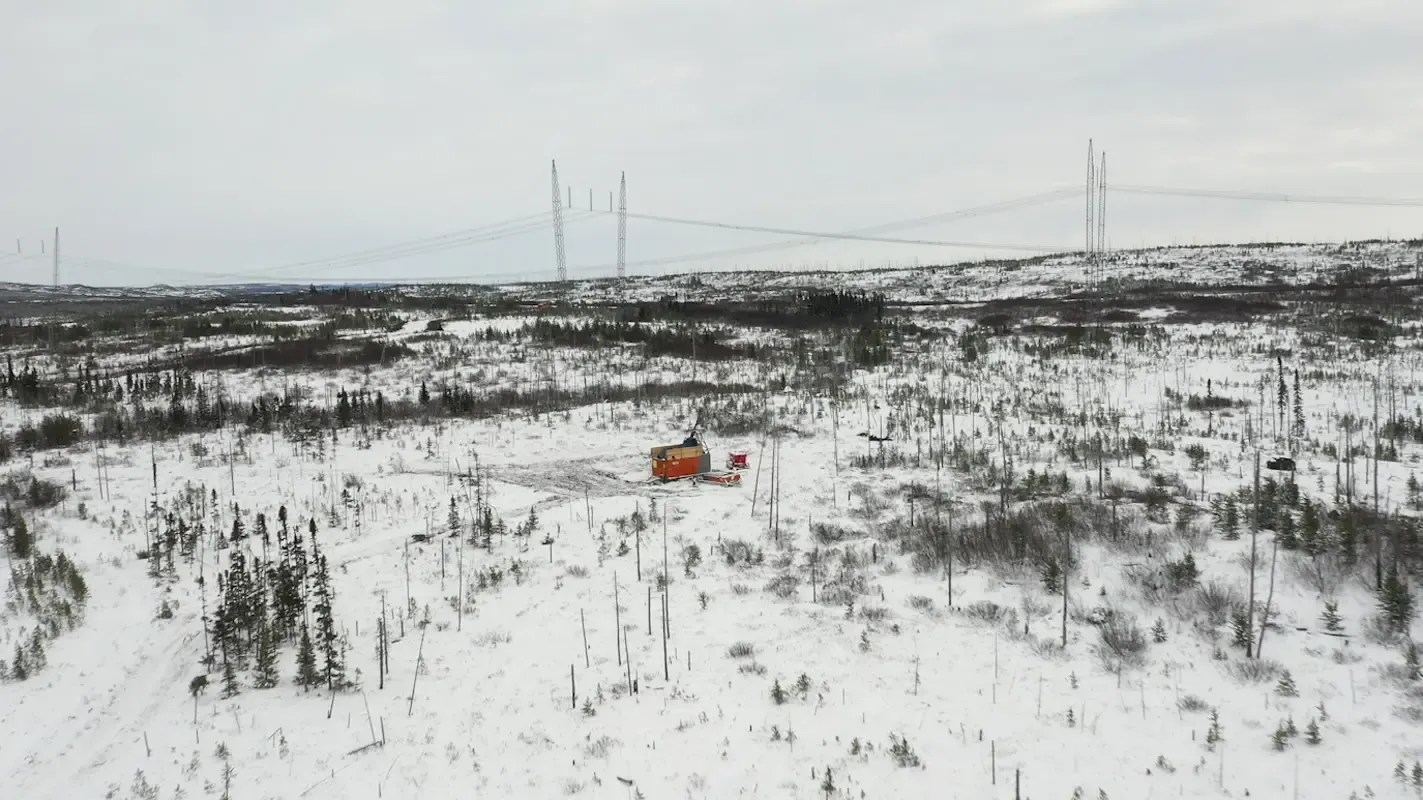
Our Path to the World’s First Carbon-Neutral Polymetallic Mine
Power Metallic's ESG and Sustainability report — covering carbon offsets, exploration footprint, green hydro power, tailings sequestration, First Nations cooperation and disclosure standards.
The Report
Table of Contents
Introduction
Our Vision
ESG & Sustainability
Nickel & Copper
First Steps
Power Metallic's ESG Platform Programs
Offset of Drilling CO2 Emissions
Minimize Exploration Disturbance
Utilize Green Hydro Power
Use Environmentally Friendly Mine Design
Verification of Tailings Sequestration
CO2 Footprint Audit & Disclosure
First Nations Co-operation Programs
Additional ESG/Sustainability Initiatives
Choosing Disclosure Standards
Upsizing Our Corporate Governance
The Road Ahead
This page summarizes Power Metallic's inaugural 2022 ESG report.
Power Metallic Mines Inc.'s inaugural ESG/Sustainability Report (2022) was presented to stakeholders, shareholders, and the investment community.
Investors and government/financial regulators are requiring more ESG (Environment, Social, Governance) and Sustainability reporting disclosure requirements with climate change mitigation, social responsibility, and energy transition strategies at the forefront of their focus.
Therefore, more public, and private companies are providing stakeholders with additional detail and disclosure regarding situation and regional specific mitigation initiatives, policies, and programs that today are a necessary and important part of a company’s overall corporate operating strategy.
As the corporate world moves more rapidly to provide added information in this regard with disclosure of ESG materiality and impacts, including the physical and financial risks of climate change, the junior mining exploration sector is following suit.
The 2022 report described Power Metallic as preparing for future challenges and implementing programs intended to have a positive and far-reaching impact for stakeholders and for the regions and communities in which it operated.
The 2022 report outlined Power Metallic's ESG/sustainability programs then in place and its planned commitments for a sustainable and responsible future for its people, operations, products, the environment, and the partnerships and communities it served and respected.
OUR VISION: Establishing an ESG/Sustainability Platform
The 2022 report described Power Metallic’s environmental, social, governance & sustainability (ESG&S) vision as providing and respecting shared values and implementing progressive programs intended to be environmentally responsible, socially and culturally sensitive, and inclusive throughout its operations and activities. The report described this as establishing an ESG/Sustainability Platform for the company.
The 2022 report stated that the company would work to identify and address the pertinent ESG&S issues (materiality) relevant to its industrial sector, such as First Nations partnerships & local community relations, water quality & quantity monitoring and protection, workplace diversity & training, biodiversity protection, and our carbon footprint. It also set out goals and objectives to advance each of these towards performance levels better than the regulatory compliance standards current at the time.
We aim to set the highest of environmental, health & safety standards (EH&S) for our people, our operations & company licensed contractors, as well as for our surrounding operating environment, locations, and communities where we carry out any of our corporate business activities.
As Power Metallic developed and matured, the 2022 report set out an intention to draft and adopt suitable ESG & Sustainability polices/programs and operating procedures aimed at minimizing and ameliorating (as much as possible) any known or perceived negative impacts material to its business operations, the environment & ecosystems in which it operated, and the communities on which it relied and served.
The company’s ESG/Sustainability Platform also includes the objective to provide full & transparent disclosure regarding the progress of our current and planned ESG&S programs and initiatives. The inaugural report set the stage by describing where the company stood in its ESG journey, where it intended to go, and how it intended to get there…. for its people, for its products and for the planet.
ESG & SUSTAINABILITY: Why They Are Vital & Beneficial for All Stakeholders
Recent data from North American and global investor surveys indicates that ESG criteria and corporate sustainability programs are gaining in both retail and institutional “top-of-mind” importance rapidly over the past several years. Since the recent rise in interest rates and inflationary pressures this focus has waned somewhat but still has momentum in overall total stakeholder attention.
The general trend continues to indicate more traction towards mandatory vs. voluntary ESG/Sustainability compliance and disclosure requirements going forward, including scenario analysis of the physical, financial, and reputational risks of climate change.
The benefits for any corporation by integrating ESG/sustainability programs into their overall strategic planning and operational functions while providing full disclosure, is not only limited to superior “green/sustainability” rankings, positive public awareness, and increased investor favoritism.
The other advantages include exacting procedural regulatory compliance, enhanced community engagement and partnerships, upgraded brand/product recognition, peer group positioning & valuation upgrades, improved access to capital (plus a lower average cost of capital), safer & more sustainable operations, talent attraction, employee training and retention scaleups, better operational efficiency, innovation and lower cost structures, resilience to physical, financial and operational risks, as well as strategic planning overhauls that identify opportunities for improvements in all of the above mentioned areas.
The 2022 report described Power Metallic as being in the early stages of reviewing and evaluating the ESG criteria material to its operations as a junior mineral exploration company. It set out an aim to design and implement sustainability programs addressing those criteria and protocols to be introduced as the company developed and expanded, with each protocol intended to address related ESG materiality requirements, risks, and opportunities effectively and responsibly. However, since the company is involved in the hunt for critical battery metals of the highest quality, this is in fact a good part of its sustainability story.
NICKEL & COPPER: Critical Metals for the Drive to Net-Zero and Climate Change Mitigation
Critical minerals present a generational opportunity for Canada in many areas: exploration, extraction, processing, downstream product manufacturing and recycling. The federal government is committed to seizing this opportunity in a way that benefits every region across the country. Critical minerals are the building blocks for the green and digital economy. There is no energy transition without critical minerals: no batteries, no electric cars, no wind turbines, and no solar panels. The sun provides raw energy, but electricity flows through copper. Wind turbines need manganese, platinum, and rare earth magnets. Nuclear power requires uranium. Electric vehicles require batteries and fuel cells made with lithium, cobalt, palladium, gold and nickel and magnets. Indium and tellurium are integral to solar panel manufacturing.
Our flagship NISK project is a high-grade nickel sulphide deposit located in the world-class mining jurisdiction of Quebec, Canada beside a major provincial highway and a Hydro-Quebec substation.
Classified as Class I Nickel, our NISK deposit can be used for EV batteries which requires very stringent and tight tolerances. Only Class I nickel is currently of sufficient quality and economic for use in EV batteries.
However, EV vehicle manufacturers and the battery makers must also consider the source and supply chain of their material components. ESG and sustainability pressures are currently growing, so EV manufactures (and all other users of critical metals) are forced to consider more than just quality and cost, but also the ESG and climate footprint of what they are utilizing in their operations and final products.
With access to abundant low-carbon hydropower, a shallow mineral depth and established infrastructure nearby, the NISK deposit is ideally positioned to be one of the most low-cost and environmentally friendly sources of high-grade of Class I nickel in the world, including supplies of copper, cobalt, and palladium.
Our copper projects in Chile also have excellent potential to supply the greening economies of the world with the critical metal necessary for their energy transitioning to electrification and away from fossil fuels. Also, our gold properties in British Columbia could provide low-cost, low-carbon gold for EV batteries and electronics and many other applications for the green economy.
Please go to the main page of our website ( www.powermetallic.com ) and our most recent corporate overview ( PowerPoint Presentation ) to view our full critical metals property portfolio and strategies to develop each in a zero-carbon environment.
FIRST STEPS: Standards Selection
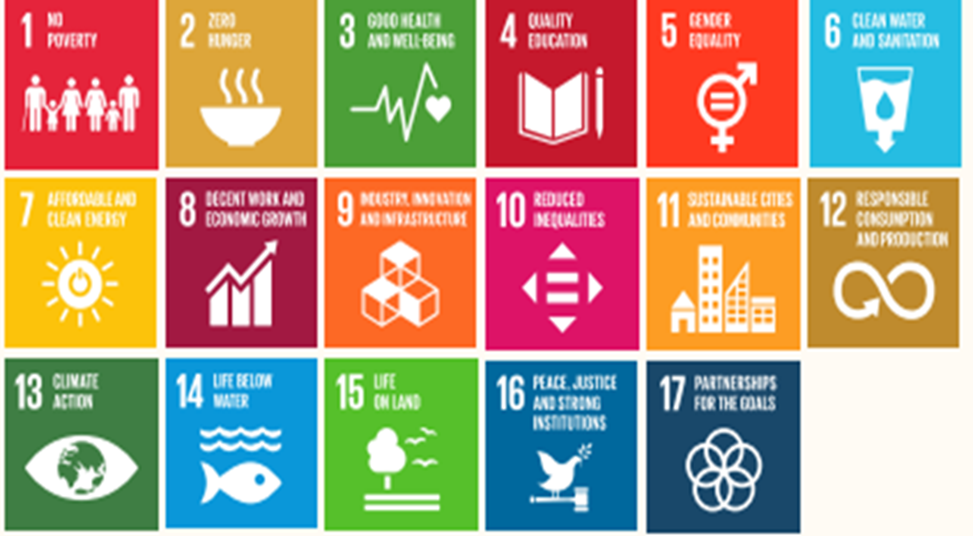
As a backstop principle to the activities described, the 2022 report stated that Power Metallic was committed to follow and adhere to the United Nations Sustainable Development Goals (UN SDGs) as they apply to the Mining and Mining Exploration sectors.
The 2022 report stated that the company was reviewing its operations under these UN SDG frameworks and protocols and intended to adopt those relevant and closely aligned with its activities. It also set out an aim to adhere to as many of the 17 SDGs as possible over the life of its mines as projects moved through their development stages ( THE 17 GOALS | Sustainable Development [un.org] ).
POWER METALLIC’s ESG/SUSTAINABILITY PLATFORM PROGRAMS
The 2022 report described the company’s environmental footprint as relatively small for a junior mining exploration company, stated its aim to minimize impacts on local ecology, and noted that it had acquired the necessary regulatory and First Nations access permits for its mining exploration claim areas and drill sites.
The 2022 report stated that Power Metallic sought to hire a largely local, diverse, and highly skilled workforce with a high percentage of First Nations participation whenever and wherever available, noting this was the case at its NISK site in James Bay, Quebec.
The 2022 report stated that the Board of Directors (BOD) reviewed operations, financial reporting, and disclosures regularly and adhered to the mining exploration reporting standards set out in the NI-43 101: Policy Guidelines and NI-58-101: Disclosure of Corporate Governance Practices issued by the CSA (Canadian Securities Association) and adopted by the BCSC (British Columbia Securities Commission), the OSC (Ontario Securities Commission), and other regulatory bodies governing capital-markets reporting and disclosures for Canadian-listed junior mining exploration companies.
The 2022 report also stated an intention to follow and adhere to the then- proposed CSA sponsored National Instrument (NI-51-107): Disclosure of Climate-related Matters. At the time, the report noted that the instrument was expected to be finalized and deemed mandatory for all miners in Canada by early 2024, with junior mining exploration companies likely given until early 2025 to comply. The report stated that the company expected to be ready before then and provided more background later in the document.
The 2022 report described the company’s activities in Chile as being at an early stage of exploration with minimal physical disturbance. It stated that Power Metallic adhered to local, regional, and state environmental laws and permit regulations and that the BOD regularly reviewed its operations to support that governance.
The 2022 report stated that, as exploration work, resource establishment, and mine development studies expanded in Quebec, British Columbia, and Chile, the company intended to adhere to its ESG policies and timelines and upgrade them before the need arose.
The following sections describe the initiatives identified in the 2022 report in more detail:
Offset Drilling CO2 Emissions with Karbon X “Verra Certified” VOCs
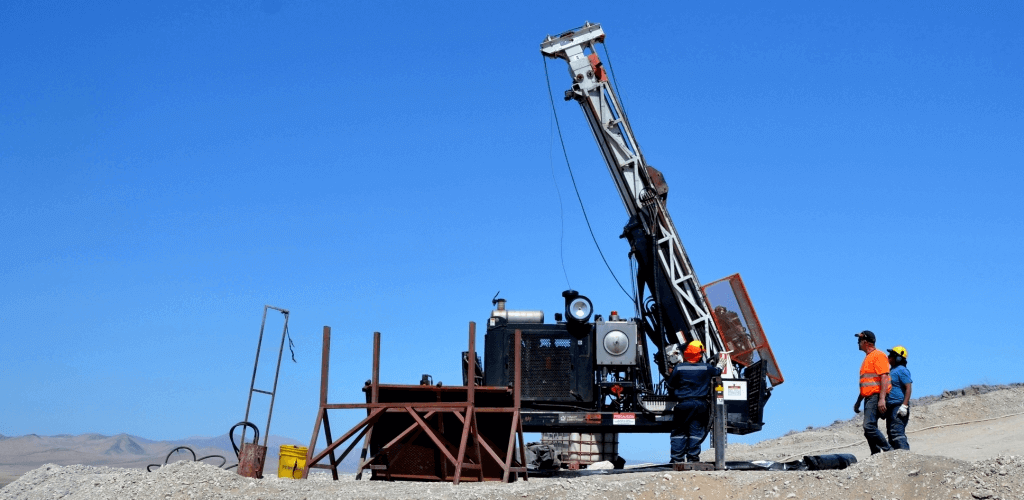
The report described Power Metallic as the first junior mining company in Canada to offset its 2023 drill program (of up to 40,000 meters) with Voluntary Carbon Offsets (VCOs). ( Power Metallic (formerly Power Nickel) Retains Karbon-X to Offset their 2023 Drill Program.pdf ).
The report stated that the company had retained Karbon-X Corp ( www.karbon-x.com ) to retire 159 high quality Verra VCUs (Verified Carbon Units) carbon offsets in the name of Power Metallic Mines Inc. The report said those 159 offsets were intended to counteract 159 tonnes of greenhouse gas (GHG) emitted by burning 60,000 litres of diesel in 2023 exploratory drilling operations and represented the company’s commitment to offsetting its drilling program in the years that followed.
The report stated that these offsets were intended to neutralize the diesel fuel used to drill approximately 40,000 metres and described this as symbolizing the company’s goal of becoming the first carbon-neutral nickel mine in the world.
One carbon offset represents the reduction, removal, or avoidance of one metric tonne of greenhouse gas (GHG) emissions from a certified project. Each offset is certified by a third-party verification board to ensure the project’s efficacy and is identified by a unique serial number.
When organizations and individuals purchase carbon offsets to reduce their carbon footprint, the offset is taken out of circulation. This process is referred to as retiring and ensures that each offset can only be claimed once.
Karbon-X Corporation is a tech-based carbon marketing company specializing in the sale of carbon offsets to offset greenhouse gas emissions from industrial applications and for citizens that are dedicated to reducing their impact on the planet.
The 2022 report set out an intention to continue working with Karbon-X to offset the company’s carbon footprint as exploration drilling advanced. It also stated that the company would investigate the suitability of electric-powered drill rigs if and when they became economically and situationally available.
Minimize Exploration Disturbance Using Fleet Space Technologies
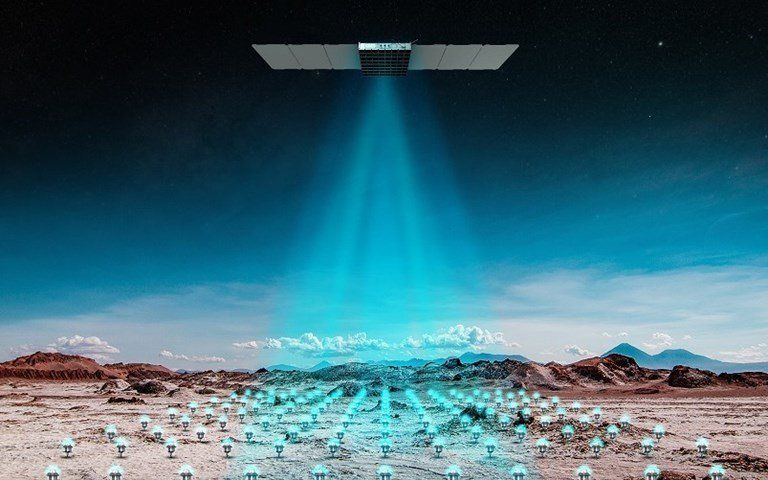
The report noted that Power Metallic had announced a partnership with Australian-based Fleet Space Technologies ( www.fleetspace.com ) , a developer and operator of a constellation of microsatellites that delivers universal connectivity across the globe. The announcement stated that the company would use Fleet Space’s sound-mapping technology at NISK to locate additional high-grade nickel sulfide deposits with greater accuracy.
Called "Exosphere," a rapid mineral exploration solution, Fleet Space mapping technology has already delivered promising results in exploration projects for high-grade nickel in Michigan and Minnesota. The satellite-enabled earth scanning technique is called Ambient Noise Tomography (ANT). Battery-powered devices known as ‘Geodes', which can be transported by hand, are used to capture background vibrations from natural and man-made sources. The data can be used to develop a full 3D visualization of the subsurface down to 2 km in depth. Fleet's Geodes are up to 10x more sensitive than existing nodal geophones, leading to better accuracy and depth of results. The exploration team can get a clear, rich image of what resources may be below ground in a period that can be as short as four days.
Historically nickel sulfide deposits are located in the form of pods in a geographic area. The report stated that the nickel ore deposits at NISK were expected to occur in similar pods. At the time, it described Power Metallic as exploring 1 square kilometer of its 45 square kilometer land package and said Fleet Space’s earth-scanning technology was intended to improve the company’s chances of finding additional deposits and its drilling accuracy. ( Power Metallic (formerly Power Nickel) Announces Partnership With Fleet Space Technologies )
Another benefit that the use of the technology offers is that due to its higher level of accuracy in detecting nickel ore deposits, it can significantly decrease land disturbance in the exploration stage).
Utilize Green Hydro Power to Provide Energy for All Mining Activities
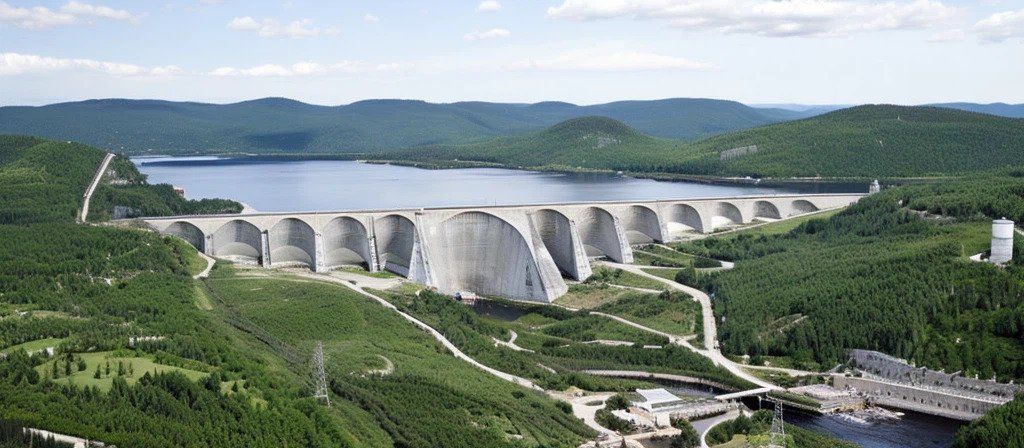
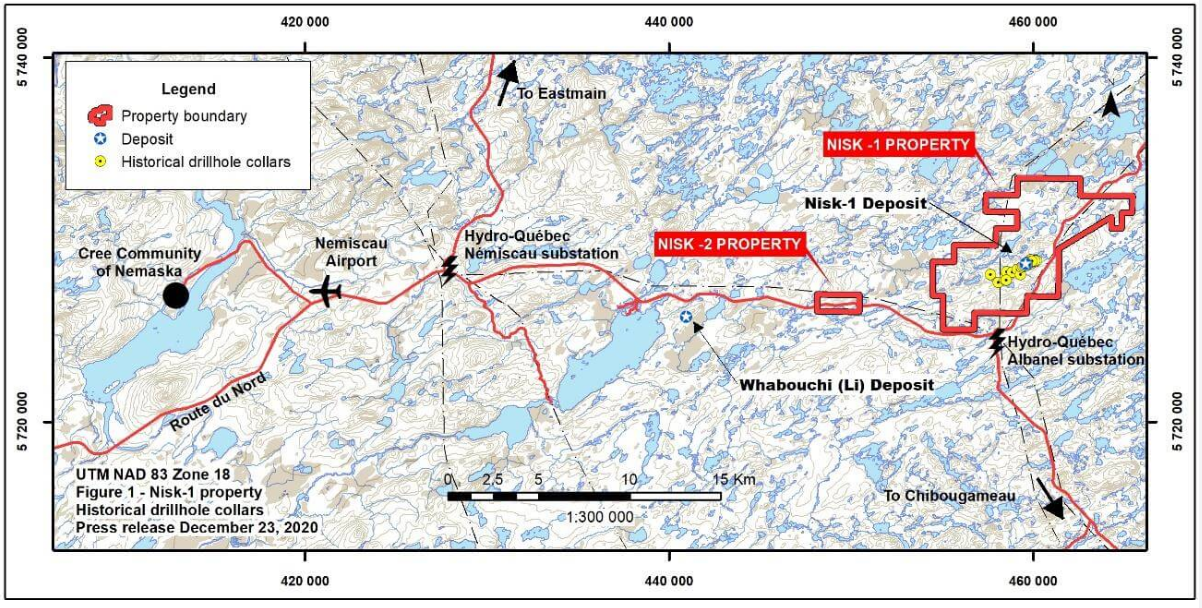
The company’s flagship NISK nickel project is situated nearby Quebec Hydro’s large Albanel substation (serviced by a 735GW hydro-electric line) that could provide more than enough green hydroelectric power for any future mine development and operations, including possible expansions (please see map below).
The substation is nearby the Nemaska regional airport, and is also serviced by Route-Nord, the main transportation road joining the Cree Nation community of Nemaska, the Nemiscau regional airport and the town of Chibougamau ( North Road jamesbayroad.com ) in the “Jamesie Region” of Quebec.
Use Environmentally Friendly Mine & Mineral Processing Design
The company is planning to use the best sustainable and proven underground mining processes and processing technology design available when we get to that stage in our development at any of our properties. It is imperative that to be a carbon neutral mining company we seek out and utilize only the most sustainable and cost-effective methodologies available and also strive to develop new clean-tech pathways for processing, transportation, delivery, and supply chain avenues.
The 2022 report identified electrification of motorized and energy-dependent material handling, processing, and transportation systems as an option to be examined and, if cost-effective, fully exploited, particularly with vehicle charging stations serviced by hydro-electric power adjacent to a possible future mine site.
For underground extraction and refining alternatives, the company may also study the possibility of using bioleaching methodologies. Bioleaching is a low-cost process utilizing naturally living organisms, such as oxidizing bacteria. This method is much cleaner than the traditional heap leaching using cyanide. Bioleaching is one of several applications within biohydrometallurgy and several methods are used to recover copper, zinc, lead, arsenic, antimony, nickel, molybdenum, gold, silver, and cobalt. Bioleaching - Wikipedia
Verification that Ultramafic Tailings Naturally Sequester CO2
Mine tailings, or the waste material not utilized as the final product from mine processing operations, that were previously been seen as a liability, could play an important part in helping mines (with specific geological attributes and characteristics) achieve net zero carbon emissions through the process of carbon mineralization.
Specifically, tailings of ultramafic hosted deposits (ultramafic rock is defined as an igneous rock composed of 90 percent or greater of one or a combination of the following iron /magnesium-rich, dark -colored silicate minerals) like those found in nickel sulfide deposits located at our NISK site – have the potential to absorb a significant amount of CO2, according to numerous studies done all over the world.
Carbon mineralization is also classified as a natural carbon capture & storage (CCS) process. It is a process whereby ultramafic rocks react with atmospheric CO2 and convert it back into rock, where the CO2 can be stored in a safe and stable form for thousands of years. Ultramafic rocks can contain highly reactive minerals that have strong potential for carbon mineralization. The mining process strongly enhances that potential by breaking up the rock. Regular carbon mineralization involves the usually slow and natural process of weathering. However, this can be accelerated much faster in mine tailings waste because the rocks have been finely crushed and the surface area exposed to the surrounding air is much greater.
In addition to developing ways to measure the carbon mineralization process, further international research work* is focused on speeding up and enhancing the natural process. The research looks to double or triple that rate through relatively inexpensive surface modifications like churning and managing water content.
The 2022 report stated an intention to work with the Critical Minerals Centre of Excellence (CMCE)+, Natural Resources Canada, and Karbon-X to develop, test, and establish a certifiable and verifiable mine tailings-based carbon sequestration program (with associated offsets) when the potential nickel mine at NISK begins its planning stages in the future. This program could add to the company’s net-zero ambitions and future targets and might yield other possible benefits towards its overall goal of carbon neutrality.
+ The Critical Minerals Centre of Excellence (CMCE) at Natural Resources Canada leads the development and coordination of Canada’s policies and programs on critical minerals, in collaboration with industry, provincial, territorial, Indigenous, non-governmental and international partners. The Centre aims to advance critical mineral resources and value chains, which are essential for a green and digital economy. * Using tailings to get to net zero - Canadian Mining Journal (June 2021)
The 2022 Plan for Operational CO2 Footprint Auditing & Reporting
The 2022 report set out an intention to track, measure, and disclose the CO2 footprint of the company’s operations as its projects advanced in Quebec, British Columbia, and Chile. It noted that suitable systems for collection, baseline comparisons, and amelioration practices first had to be put in place so performance and progress towards the goal of carbon neutrality throughout operations could be reported with confidence and without greenwashing.
The report also noted that timelines had to be established and that the ESG & sustainability issues most material to Power Metallic’s stakeholders and most relevant to a maturing junior mining company had to be selected.
The report stated that this work would be carried out by the BOD and senior management team over the following 12 months, with results to be disclosed in public corporate ESG progress updates (see more background in the section on ESG Standards Selection below).
First Nations Cooperation Agreements & Community Support
It is the responsibility of the company, its Board of Director’s and all related parties that wish to do business in these areas, to respect the rights of all indigenous peoples. The company aims to fully honor their right to free, prior and informed consent and to have the opportunity to partner in our business activities, while protecting all their customs and the land on which they call home. This is part and parcel of the UN Declaration on the Rights of Indigenous People (UNDRIP), and we intend to respect these rights during every step of our progress and development ( DRIPS_en.pdf [un.org] ).
We are also aware of the CREE Nation Mining Policy, which was adopted by the Grand Council-Cree Regional Authority Council-Board. It has been the Cree Nation mining policy framework for solitary and/or joint development projects since July 2010. The 2022 report stated that the company was examining the policy and intended to adapt to its requirements as the projects advanced.
The pillars of the Cree Nation Mining Policy are:
1. Promotion and support of mining activities – The Crees support and promote the development of mining as part of their approach to natural resource management and as a tool for social and economic development.
2. Mining and sustainable practices – The Crees believe that mining activities must be done in a manner that is compatible with sustainable development. Appropriate existing governance tools are to be used throughout all phases of mining activities, including social and economic agreements, environmental assessments and biodiversity protection, and remediation processes.
3. Transparency and collaboration – The Crees believe that mineral exploration and mining activities in the territory should be a transparent and collaborative process. Mining | The Grand Council of the Crees (Eeyou Istchee) [cngov.ca]
The 2022 report also stated an intention to refer to and utilize the Mining Association of Canada’s (MAC) Indigenous & Community Relationships Guidelines which provide an additional set of tools to aid in our upcoming relationship development programs with First Nations going forward ( Indigenous Affairs - The Mining Association of Canada ).
ADDITIONAL ESG/SUSTAINABILITY INITIATIVES: Plans Identified in the 2022 Report
Choosing Standards, Disclosure Methodology and Transparency
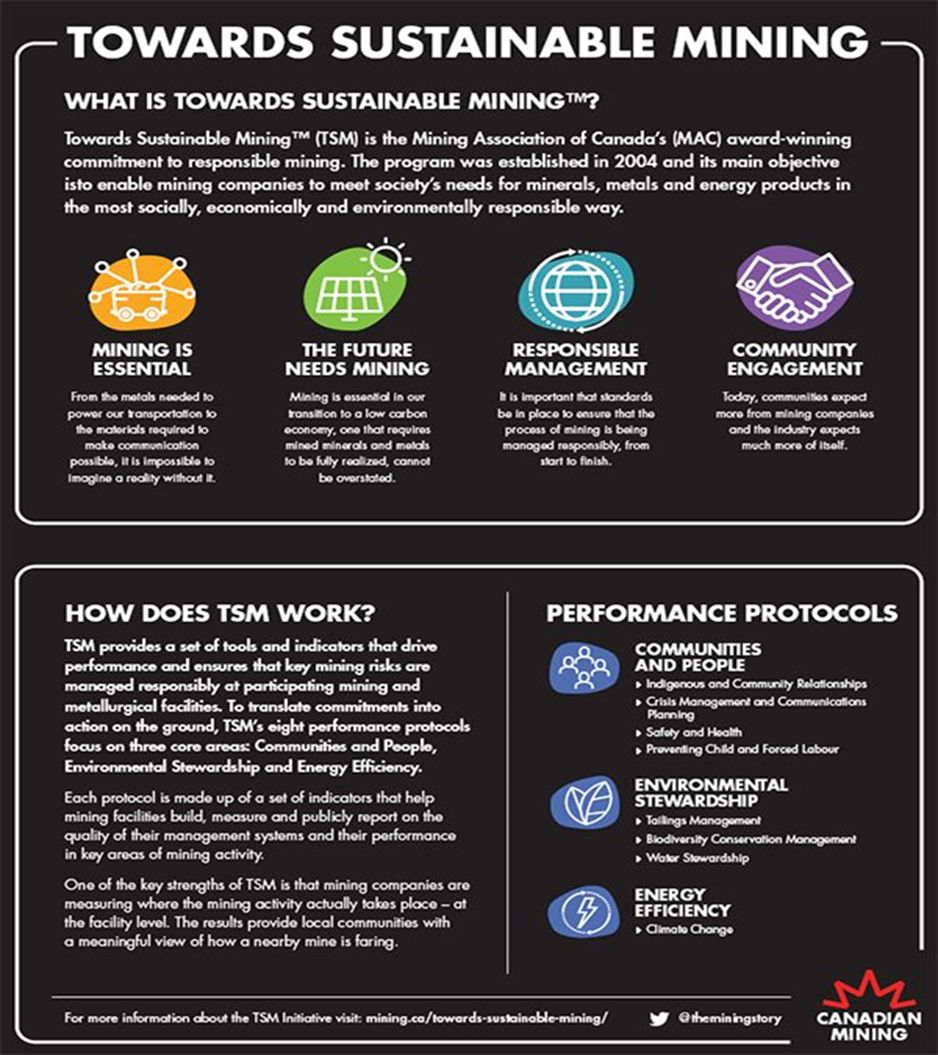
The 2022 report stated that Power Metallic was examining the Mining Association of Canada’s “Towards Sustainable Mining” Standard, a globally recognized sustainability program supporting mining companies in managing key environmental and social risks, and that the company might adopt protocols suitable for a junior mining company.
The Towards Sustainable Mining (TSM) initiative allows mining companies to turn high-level environmental and social commitments into action on the ground. At the same time, it provides communities with valuable information on how operations are faring in important areas, such as community outreach, tailings management and biodiversity.
The TSM Guiding Principles are backed by a suite of protocols that allow mining companies or effectively measure and publicly report their performance to all stakeholders.
The report stated that the company would also examine the Global Reporting Initiative (GRI) Standard (see Figure 1) and its “Mining Sector” materiality items (more than 25 suggested criteria), then choose the five or six most applicable to a junior mining company similar to Power Metallic. If adopted, the report said senior management and the BOD would devise programs and initiatives for each as exploration and possible mine development advanced. ( gri_mining_sector_standard_exposure_draft.pdf [globalreporting.org] ).
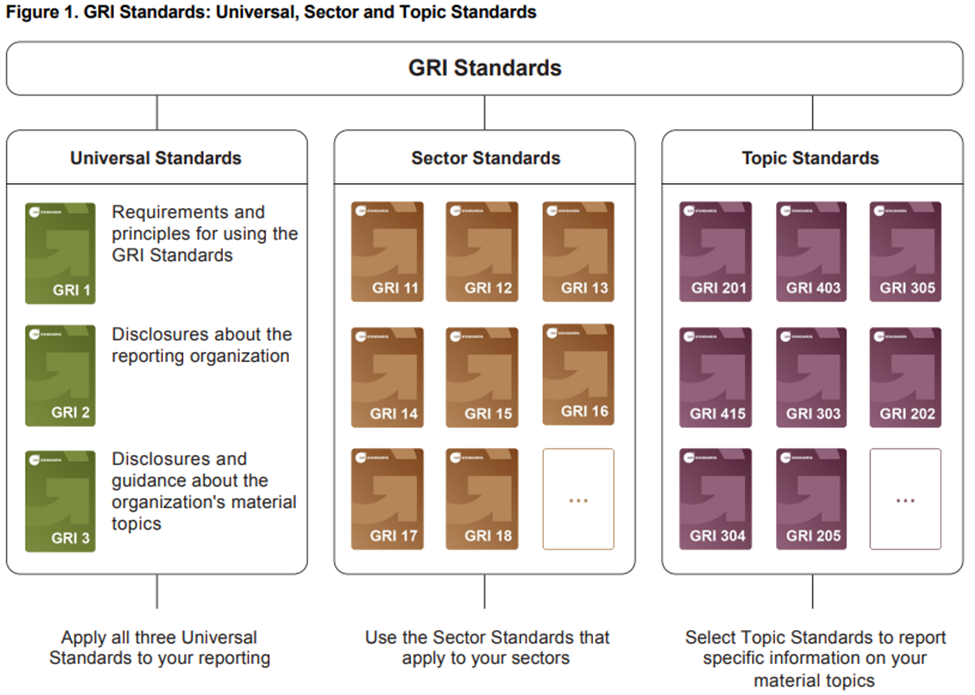
The report stated that the company intended to disclose its progress in adopting these standards and protocols regularly, through separate annual ESG reviews and regular quarterly TSXV reports. It also set out an intention to account fully for the relevant risks and opportunities arising from the materiality criteria used to shape its ESG/sustainability strategy and programs.
The report stated that, later in the path towards becoming an operational mine and where possible, relevant, appropriate, and cost-effective, the company intended to use the Science-based Target Initiative (SBTi) protocols and methodologies to determine metrics and targets needed to meet GRI requirements ( sciencebasedtargets.org ).
UPSIZING OUR CORPORATE GOVERNANCE: Policy & Disclosure Development
The Board of Directors of Power Metallic has responsibility for the stewardship of the company including responsibility for strategic planning, identification of the principal risks to the company’s business and implementation of appropriate systems and programs to manage these risks, succession planning (including appointing, training and monitoring senior management), communication with investors, all stakeholders and the financial community and the integrity of the company’s internal control and management information systems. These functions are all covered by National Instrument 58-101: “Disclosure of Corporate Governance Practices of the Canadian Securities Administrators -CSA ( Homepage - Canadian Securities Administrators [securities-administrators.ca] )” and is posted on the Power Metallic SEDAR filings page here.
The CSA is now proposing a new National Instrument (NI-51-107: Disclosure of Climate-related Matters ( Canadian securities regulators seek comment on climate-related disclosure requirements - Canadian Securities Administrators [securities-administrators.ca] ) and have followed up with further comments regarding the final development of the new disclosure requirement ( Canadian securities regulators consider impact of international developments on proposed climate-related disclosure rule - Canadian Securities Administrators [securities-administrators.ca] ).
The report explained that the proposed requirements contemplated disclosure by issuers related to the four core elements of the Task Force on Climate-related Financial Disclosures (TCFD) (a framework since incorporated into the IFRS Sustainability Disclosure Standards) ( www.fsb-tcfd.org ) recommendations:
- Governance – an issuer’s board’s oversight of and management’s role in assessing and managing climate-related risks and opportunities.
- Strategy – the short-, medium- and long-term climate-related risks and opportunities the issuer has identified and the impact on its business, strategy, and financial planning, where such information is material. As a modification from the TCFD recommendations, the proposed disclosure would not include the requirement to disclose “scenario analysis”, which is an issuer’s description of the resilience of its strategy within different climate-related scenarios, including a 2°C or lower scenario.
- Risk management – how an issuer identifies, assesses, and manages climate-related risks and how these processes are integrated into its overall risk management.
- Metrics and targets – the metrics and targets used by an issuer to assess and manage climate-related risks and opportunities where the information is material.
The report said the company expected the final regulation before the end of the second half of 2023 and expected it to be mandatory for large public and private issuers by the start of 2024. It also noted the expectation that junior mining exploration companies would have until the start of 2025 to comply and would face fewer reporting requirements than corporations with producing mines.
The report stated that Power Metallic had begun preparing for the new disclosure regulation. With assistance from independent ESG specialists, it said the Board of Directors was drafting the proposed charter and policy items, beginning the materiality selection process and related ESG programs, and developing a reporting and delivery structure intended to prepare the company for compliance and disclosure once instituted.
The report also stated that the BOD would provide its members and senior management with advanced training in climate risk analysis and disclosure to support complete and transparent ESG/sustainability communications to stakeholders and regulators.
THE ROAD AHEAD: Transparency, Communication and Progress
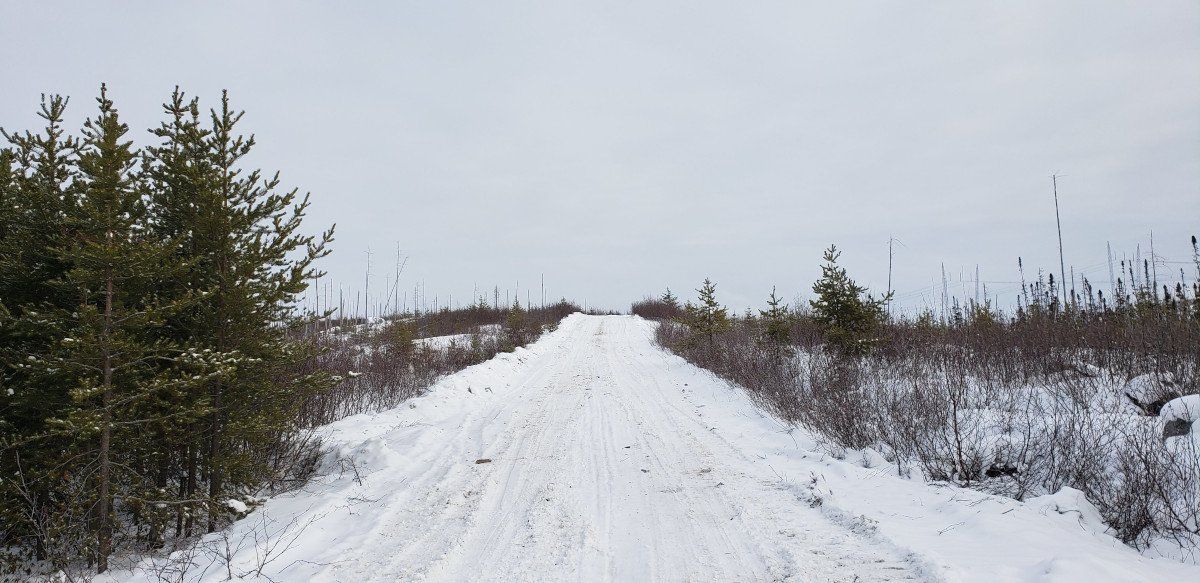
The report presented an outline of the ESG/Sustainability programs then in place and those under development.
It stated that the company intended to continue updating stakeholders on its planned commitments, ESG materiality selection, new program development & targets, peer group comparisons, and risk/opportunity assessments.
We welcome your comments and feedback by contacting the Power Metallic team at: info@powermetallic.com